See Beyond the Fairway: Why Your Golf Cart’s Windshield Matters More Than You Think
Golf carts are no longer just for the course—they’re a primary mode of transport in neighborhoods across Florida, from Orlando communities to retirement villages in Lee County. With this increased usage comes greater responsibility, especially when it comes to safety and legal compliance. One often overlooked but critical component? The DOT-approved windshield. Unlike standard clear plastic panels, a true DOT windshield meets federal safety standards for impact resistance, optical clarity, and structural integrity, making it essential for carts operated on public roads.
These windshields aren’t just about compliance—they protect riders from debris, wind, insects, and UV exposure during everyday use. In humid, coastal areas where salt spray and high winds are common, having a durable, properly installed windshield enhances both comfort and control. More importantly, many Florida municipalities now require street-legal low-speed vehicles (LSVs) to include DOT-certified safety features, and your windshield is a key part of that equation.
In this guide, you’ll learn how to identify a true DOT windshield, understand local regulations affecting its use, and discover installation best practices that maintain both safety and aesthetics. Whether you’re upgrading for compliance, resale value, or peace of mind, the right windshield is a foundational element of responsible cart ownership.
Understanding DOT Certification: Why It Matters for Golf Cart Windshields
When upgrading your golf cart for street use, one of the most overlooked yet critical components is the windshield—specifically, whether it’s DOT certified. DOT certification means the windshield has met strict safety standards set by the U.S. Department of Transportation for low-speed vehicles (LSVs), including impact resistance, optical clarity, and structural integrity. For carts operating on public roads—especially in regulated areas like Orlando neighborhoods, Sarasota communities, or Lee County pathways—this certification isn’t just recommended, it’s often required for legal compliance.
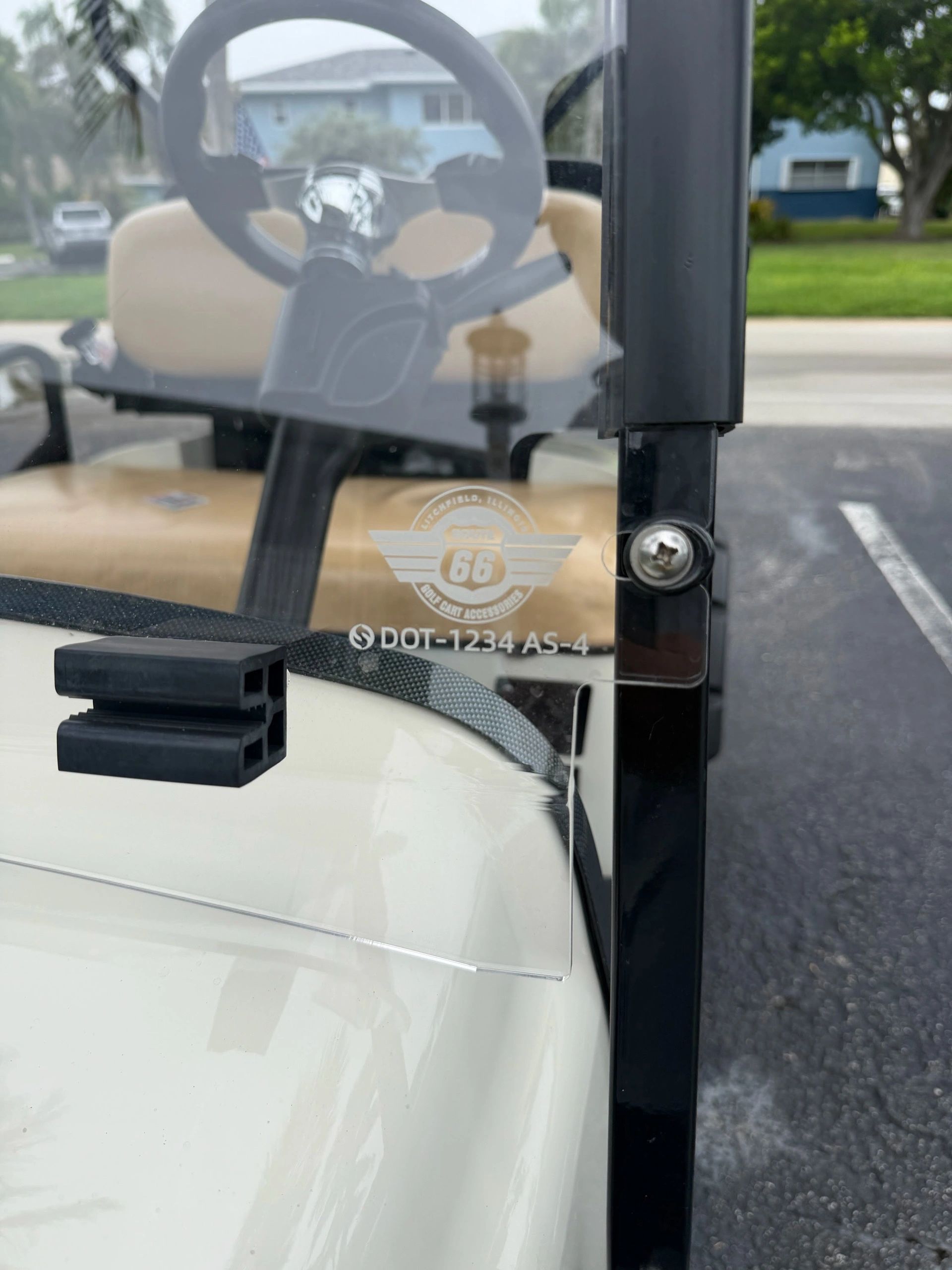
A DOT-certified windshield is constructed from laminated safety glass or approved polycarbonate materials that reduce shattering during collisions. This helps protect occupants from flying debris, sudden impacts, and ejection risks, even at lower speeds. Unlike standard recreational windshields, DOT-compliant versions are tested to withstand specific force levels and must include a permanent label identifying compliance.
Beyond safety, installing a DOT-approved windshield supports full vehicle certification, which may be necessary when registering your cart as street legal. Many Florida municipalities require proof of DOT compliance for windshields, lighting, and other safety equipment during inspection. Upgrading to a certified windshield also improves long-term resale value and ensures your cart meets evolving local regulations.
Key considerations:
- Verify the windshield has a visible DOT stamp or label
- Match the windshield’s certification to your cart’s classification (LSV vs. NEV)
- Install according to manufacturer specs to maintain integrity
- Inspect regularly for cracks, warping, or delamination
Choosing the right windshield isn’t just about visibility—it’s about safety, legality, and peace of mind on public roadways.
Choosing and Installing a DOT-Approved Golf Cart Windshield: Your Step-by-Step Guide
Upgrading your golf cart with a DOT-approved windshield enhances safety, improves ride comfort, and supports compliance with Florida’s low-speed vehicle (LSV) regulations, especially in communities like Orlando, Sarasota, and Lee County. A proper windshield protects riders from wind, debris, and insects while ensuring visibility and structural integrity. Follow this step-by-step guide to select and install the right windshield for your model.
- Verify DOT Compliance
Look for windshields labeled “DOT-approved,” meaning they’re made from laminated safety glass or polycarbonate that meets federal impact and optical standards. Avoid non-DOT acrylic panels, which may crack or shatter. - Measure Your Cart’s Frame
Use a tape measure to determine windshield height, width, and curvature. Most standard 2- or 4-passenger carts require a 36–48-inch-wide windshield. Note whether your roll bar is straight, curved, or A-frame, as this affects compatibility. - Select the Right Mounting Style
Choose between clamp-on, bolt-on, or custom brackets based on your cart’s frame material—steel, aluminum, or composite. Bolt-on systems offer the most stability, especially for frequent on-road use. - Prepare and Install the Windshield
Clean the roll bar thoroughly. Attach mounting hardware using stainless steel bolts and lock washers to prevent vibration damage. Install rubber gaskets to minimize stress and noise. - Test for Fit and Safety
Ensure the windshield sits flush without gaps and doesn’t obstruct steering or mirrors. Check that wipers (if equipped) glide smoothly across the surface.
Regular inspection ensures long-term performance—especially in humid, high-UV climates common across Central Florida.
7 Key Benefits of Upgrading to a DOT-Compliant Golf Cart Windshield
Switching to a DOT-approved windshield isn’t just about meeting regulations—it’s a critical upgrade that enhances safety, comfort, and performance, especially for carts used regularly in Florida’s dynamic environments. Whether you’re navigating neighborhood streets in Orlando, coastal pathways in Lee County, or private communities across Central Florida, a certified windshield offers real advantages that go beyond basic visibility.
- Superior Impact Resistance
DOT-compliant windshields are engineered to withstand high-velocity debris like rocks, twigs, and road gravel. Unlike standard acrylic panels, they’re built with laminated or tempered safety glass that reduces shattering risks during sudden impacts. - Enhanced Weather Protection
Stay dry and comfortable during frequent Florida downpours. A properly sealed DOT windshield blocks wind-driven rain, minimizing cabin exposure and protecting passengers, electronics, and upholstery from moisture damage. - Improved Visibility in Harsh Conditions
With anti-glare and UV-resistant coatings, DOT windshields reduce sun glare during peak daylight hours—critical for early morning or dusk rides common in active adult communities. - Structural Reinforcement for Safety
Certified windshields integrate with the cart’s frame and roll bar system, adding rigidity that supports occupant protection during rollover scenarios. - Legal Compliance for Street-Legal Use
Most counties require DOT-certified equipment for low-speed vehicles (LSVs) operating on public roads. Installing a compliant windshield ensures your cart meets Florida’s safety standards. - Longer-Lasting Performance in Humid Climates
Constructed to resist warping, fogging, and corrosion, these windshields hold up better in Florida’s hot, humid conditions compared to non-certified alternatives. - Increased Resale Value and Marketability
Carts equipped with DOT features are viewed as safer, better-maintained, and more modern—making them more attractive to buyers in retirement and gated communities.
Your Top Questions About Golf Cart DOT Windshields Answered
What does “DOT Certified” mean for a golf cart windshield?
DOT certification indicates that the windshield meets safety standards set by the U.S. Department of Transportation for glazing materials. This means the glass or polycarbonate is impact-resistant, optically clear, and designed to reduce shattering in collisions. For low-speed vehicles like golf carts operated on public roads in Florida communities—from Orlando to Lee County—using a DOT-compliant windshield is often required for street legality.
Are DOT windshields required on golf carts in Florida?
Requirements vary by municipality, but many Florida counties mandate DOT-approved windshields for street-legal golf carts, especially when traveling above 20 mph or on designated roadways. These regulations help ensure occupant protection from debris, wind, and potential impact forces. Always verify local ordinances, as rules in places like Sarasota or Fort Myers may differ from rural areas.
Can I install a DOT windshield on an older golf cart model?
Yes, retrofitting a DOT windshield is possible on most older models. Aftermarket kits include mounting hardware compatible with common frame types. Ensure the installation maintains a secure seal and doesn’t interfere with visibility or door operation.
How do I maintain my DOT windshield to ensure longevity?
Clean regularly with non-abrasive, ammonia-free products to prevent hazing or scratching. Inspect seals and hardware monthly, especially in humid climates, to combat corrosion and looseness caused by Florida’s coastal air.
What’s the difference between glass and polycarbonate DOT windshields?
Glass offers superior clarity and scratch resistance, while polycarbonate is lighter and more shatter-resistant—ideal for rough terrain or frequent use in gated communities.
Do DOT windshields need to be professionally installed?
While DIY installation is feasible, professional mounting ensures proper fit, alignment, and compliance, minimizing vibration damage and air leaks.
How often should I replace my golf cart windshield?
Replace if cracked, heavily pitted, or if the defroster (if equipped) fails. Even without visible damage, consider replacement every 3–5 years with regular sun exposure.
Driving Safe and Staying Legal: Your Final Checklist for DOT Windshields
Equipping your golf cart with a DOT-certified windshield is more than a compliance detail—it’s a critical component of safe, responsible operation on public roads and shared pathways across Florida communities. From Sarasota to Orlando and throughout Lee County, low-speed vehicles must meet specific safety standards, and a DOT-approved windshield ensures protection from debris, improved visibility, and structural integrity in the event of an incident. These windshields are manufactured to rigorous federal standards, offering impact resistance and optical clarity that non-certified glass simply can’t match.
Remember: a proper windshield installation includes securely bonded or gasket-mounted glass that fits flush with the frame, with no cracks, distortions, or delamination. Regularly inspect your windshield for chips or stress fractures, especially after driving on uneven terrain or in high-traffic areas. Small damages can quickly spread in Florida’s fluctuating temperatures and humidity, compromising both safety and legality.
To stay compliant and protected:
- Verify your windshield bears a permanent DOT stamp
- Ensure it’s designed specifically for low-speed vehicles
- Pair it with other required safety gear like seat belts, turn signals, and mirrors
Don’t wait until a roadside inspection to assess your cart’s readiness. Take action today by evaluating your current windshield and upgrading if necessary. Your safety, and that of your passengers, depends on smart, informed choices. Drive confidently—know you’re equipped the right way.